
On August 24, the Seminar on Innovative Development of High-Skilled Talent Cluster Training for the Global New Energy Industry Chain, hosted by the China-Shanghai Cooperation Organization Vocational and Technical Education Cooperation Center, was held in Ningde, Fujian. Vice President Lu Yanqi attended the seminar and, together with representatives from domestic and foreign vocational colleges, industry organizations, and enterprises, jointly initiated the establishment of the SCO Rail Transit Industry International Industry-Education Integration Community.
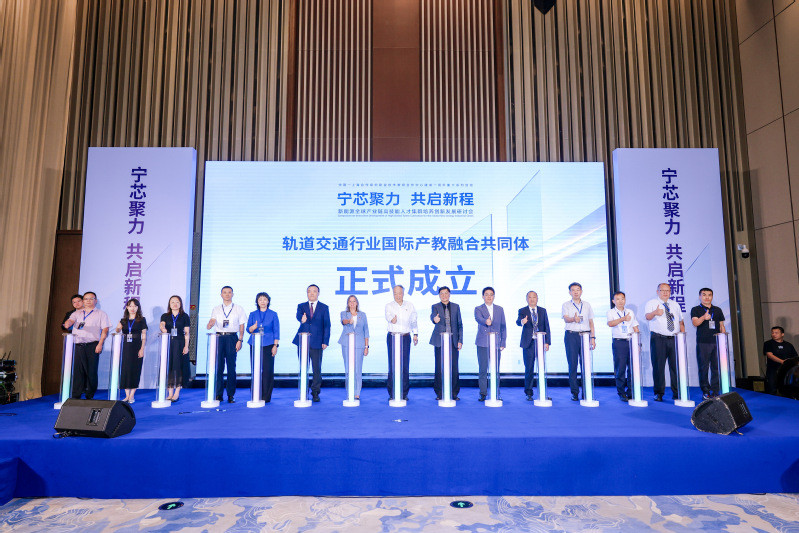
The establishment of this international industry-education integration community in the rail transit sector aims to rely on the multilateral cooperation platform of the SCO, integrate resources from colleges, leading enterprises, and research institutions in the rail transit field, and build an international collaborative innovation platform for industry-education integration. It will focus on deep cooperation in areas such as rail transit technology innovation, joint talent cultivation, faculty exchange, joint curriculum standard development, joint training base construction, and achievement transformation and output, thereby supporting international capacity cooperation in the rail transit industry and providing high-quality technical and skilled talents for the rail transit sector in SCO countries.
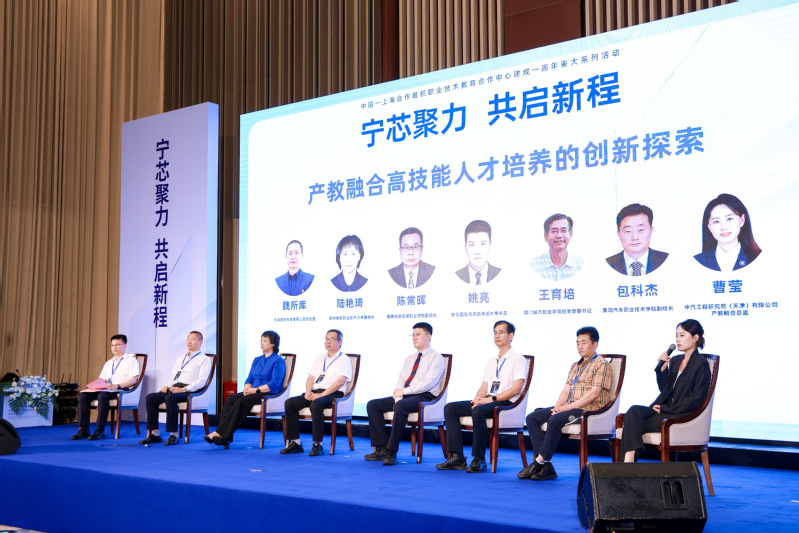
During the roundtable session, Lu Yanqi had in-depth exchanges and discussions with the guests on the theme of Innovative Exploration of High-Skilled Talent Cultivation through Industry-Education Integration. She emphasized that the core competitiveness of vocational education lies in establishing a long-term mechanism that continuously responds to industrial changes, truly achieving industry-driven teaching, industry-guided teaching, industry-reformed teaching, and industry-promoted teaching. Guided by this concept, our university has carried out deep cooperation with China Railway Zhengzhou Bureau, built a three-level school-enterprise docking mechanism, dynamically incorporated the talent needs and technical challenges of frontline positions into the entire process of training program design, curriculum development, and teaching resource construction, achieving simultaneous strengthening of theoretical depth and practical ability, and ensuring that talent cultivation is always in sync with industrial development.
During the seminar, our university representatives also visited the SCO Vocational Education Center Achievement Exhibition and the CATL headquarters showroom, gaining an in-depth understanding of cutting-edge technologies in the new energy industry and the achievements of industry-education integration practices. Next, the university will take joining the community as an opportunity to actively serve the industrial development of the SCO region and contribute the university’s strength to the international cooperation of China’s rail transit industry and the high-quality development of vocational education in the SCO region.
