
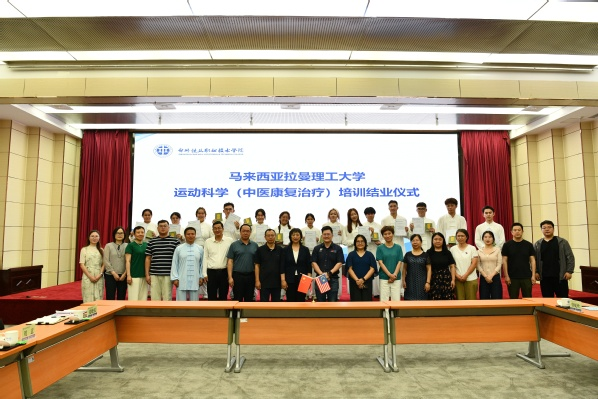
From June 7 to June 11, the one-week Malaysian Sports Science (Traditional Chinese Medicine Rehabilitation) knowledge and skills training program was successfully completed at our university. Fifteen teachers and students from Tunku Abdul Rahman University of Management and Technology received systematic training and gained fruitful results.
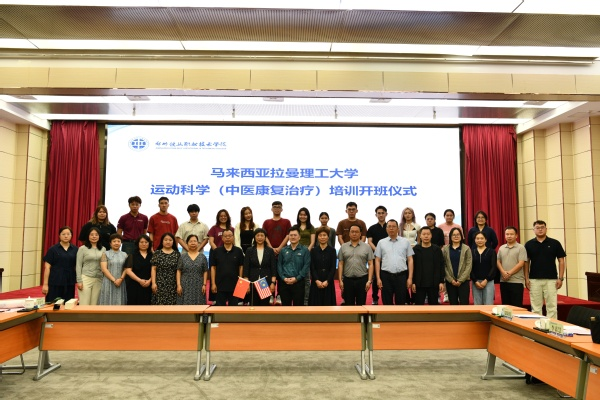
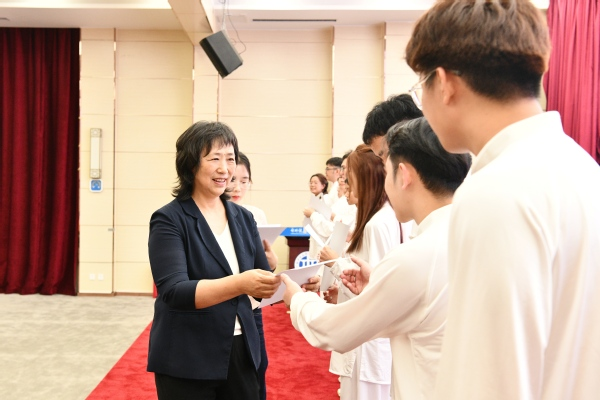
At both the opening and closing ceremonies of the training program, Vice President Lu Yanqi delivered speeches and awarded certificates to the trainees. In her speech, Vice President Lu reviewed the university’s dedication to vocational education, its commitment to nurturing talent, the accumulation of educational heritage, and the solidification of its foundation, gradually developing into a distinctive and strong vocational institution. She warmly congratulated all trainees on their achievements, emphasizing that under the careful guidance of the university’s teachers, the trainees’ theoretical knowledge and practical skills were comprehensively improved, laying a solid foundation for their future careers. She wished the trainees would take the rehabilitation concepts and practical skills learned here back home, applying them in their future studies and lives, allowing the wisdom of traditional Chinese medicine and modern sports science to take root and flourish in Malaysia. She also hoped that both sides would use this training as an opportunity to further deepen exchanges between teachers and students, enhance mutual learning between disciplines, promote deeper cooperation in the field of traditional Chinese medicine rehabilitation between the two countries, become ambassadors of China-Malaysia friendship, and bring the beautiful memories of China and the friendship with Zhengzhou Railway Vocational & Technical University back to Malaysia, so that more people can learn about China, Henan, and the university.
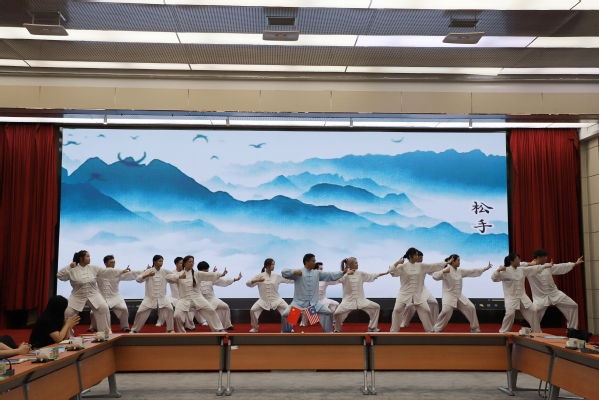
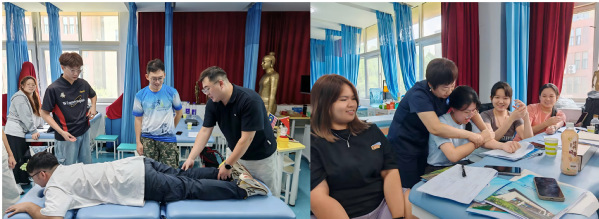
To ensure the success of this training program, under the guidance of the International Exchange and Cooperation Office, the School of Medical Technology and Engineering took the lead, with support from the School of Nursing, School of Pharmacy, and Department of Physical Education, to scientifically formulate a comprehensive training plan. This plan precisely matched training needs and practical work in terms of faculty allocation, curriculum design, and outcome assurance. During the training, the trainees focused on cutting-edge and practical topics such as sports rehabilitation, behavioral norms and correction, sports and posture, and human health. Through systematic theoretical study and solid practical training, they not only gained a preliminary mastery of core knowledge such as an introduction to traditional Chinese medicine sports rehabilitation, TCM perspectives on rehabilitation assessment, massage techniques, and acupoint location, but also personally experienced the unique charm of traditional Chinese practices such as cupping and Baduanjin. During the program, the trainees studied and practiced together with our students, deepening their understanding of TCM rehabilitation concepts through interaction and enhancing mutual friendship. At the closing ceremony, the trainees showcased their achievements in learning Baduanjin.
The implementation of this Malaysian Sports Science (Traditional Chinese Medicine Rehabilitation) knowledge and skills training program is an important practice of our university’s international education, cultural, and professional exchanges. In the future, our university will continue to leverage its professional strengths, further deepen international educational exchanges and cooperation, and promote traditional Chinese medicine rehabilitation techniques and culture.
